Brought to you courtesy of Catholic Ireland
1st Sun Lent -Year A
– 22-02-2026 –
Gospel text : Matthew 4:1-11
vs.1 Jesus was led by the Spirit out into the wilderness to be tempted by the devil.
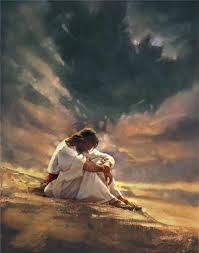
vs.3 and the tempter came and said to him, “If you are the Son of God, tell these stones to turn into loaves.”
vs.4 But he replied,
“Scripture says: Man does not live on bread alone but on every word that comes from the mouth of God.”
vs.5 The devil then took him to the holy city and made him stand on the parapet of the Temple.
vs.6 “If you are the Son of God” he said “throw yourself down; for scripture says: He will put you in his angels’ charge, and they will support you on their hands in case you hurt your foot against a stone.”
vs.7 Jesus said to him,
“Scripture also says: You must not put the Lord your God to the test.”
vs.8 Next, taking him to a very high mountain, the devil showed him all the kingdoms of the world and their splendour.
vs.9 “I will give you all these” he said, “if you fall at my feet and worship me.”
vs.10 Then Jesus replied, “Be off, Satan! For scripture says: You must worship the Lord your God, and serve him alone.”
vs 11 The devil left him, and angels appeared and looked after him.
********************************************
We have three sets of homily notes to choose from.
Michel DeVerteuil : A Holy Ghost Priest, Specialist in Lectio Divina
Thomas O’Loughlin: Professor of Hist. Theol. Univ of Nottingham
Donal Neary SJ: Editor of The Sacred Heart Messenger *******************************************************
Michel DeVerteuil
Lectio Divina with the Sunday Gospels
www.columba.ie
General Comments
Like all who see their lives as a grateful response to God’s call, Jesus must make the basic choice to trust God, whatever the circumstances he finds himself in. In this story, under very great pressure, Jesus makes his choice. Who does he remind you of at this moment of decision?
The story is told as a journey in three stages:
Verse 1: Identify the wilderness into which you – or someone you know, or your community – have been led by the Spirit. Note that it is the Spirit – God’s love – who leads him there. What does that say about true love? Deuteronomy 8:1-5 will help you to answer this question. Ask yourself also, do we sometimes go into the wilderness but not led there by the Spirit? What happens then?

Verse 11: This is the moment when an individual (or a community) who has remained faithful through a long temptation experiences the love and care of God for that person (or cause) to whom he or she has been faithful. Who are the angels God sends to look after his faithful ones?
Scripture reflection
“Walk the dark ways of faith and you will attain the vision of God.” … St Augustine
Lord, it is risky to let ourselves be led by the Spirit.
So often he leads us into the wilderness to be tempted by the devil.
We make an act of trust in you today, letting ourselves be guided by you, confident that the devil will eventually leave us and angels will appear to look after us.
Lord, sometimes we go into the wilderness because we are hurt or angry or resentful of others. Teach us that we are only safe in the wilderness if the Spirit leads us there.
“Understanding can follow only where experience leads.“ …St Bernard
We pray for parents and all those who guide others;
help them to be like you:
– not to be over-protective;
– to let their sons and daughters be led by the Spirit into the wilderness,
because it is only there that they will experience angels appearing and looking after them.
“In prison you learn the value of self-discipline, you stand outside of yourself and see your weaknesses.”… Nelson Mandela

without eating and are very hungry – hungry for love, for security, for recognition, for ordinary food. The tempter has certainly come and said to them that they can turn the stones before them into loaves.
We pray that they may reply in the words of Scripture, that we do not live on bread alone but on every word that comes from your mouth, O Lord.
We pray for the youth of today. They see the kingdoms of the world and their splendour; but to be given all these they must fall at the feet of the devil and worship him.
We pray that they may repeat the words of scripture worshipping you Lord, their God, and serve you alone.
“The heart of the Christian message is that the most salvific moment in the history of the world was when one man was pinned to a cross, unable to do anything for anyone about anything.” …Thomas Cullinane, Benedictine monk
Lord, our Church community has been led by the Spirit into the wilderness, the wilderness of falling numbers, of failure, of uncertainty, of criticism.
We remember that the Spirit always leads your people into the wilderness to be tempted by the devil.
Help us to refuse the easy solutions,
– to turn stones into bread,
– to throw ourselves from the parapet of the temple in order to prove that you will support us on your hands in case we hurt our feet against a stone
– to fall at the devil’s feet and worship him.
We renew our trust in you, confident
– that we can live on every word that comes from your mouth;
– that we need not put you to the test;
– that we worship you as our God and serve you alone.
***********************************************
Thomas O’Loughlin
Liturgical Resources for the Year of Matthew
www.columba.ie
A Note to Remember

Introduction to the Celebration

Today we begin a season that leads us through Christ’s death to his resurrection and onwards to our celebration of the Spirit dwelling within us at Pentecost. Today we begin a season of renewal in that new life, we start to take stock of the state of our discipleship as individuals and as a people. During the coming weeks we will focus on the core of our faith and our dedication to building the new kingdom announced by Jesus.
Homily Notes
2. From the outset, three skills were seen as essential.
First, the ability to pray: both alone and in a willingness to take part in the liturgy. One cannot be a Christian without prayer, nor call yourself one unless you gather with the Christians for prayer.
3. Second, a Christian must have the ability to fast. Fasting is a private and a public act. Private in that it touches one personally and makes one conscious of what one is about, literally in the pit of the stomach. This is felt religion, not an engagement with warm abstractions. Fasting is also communal in that it is done at fixed times of the week and year, and when one fasts as a part of a group, one identifies with them by sharing their practice. Then one is not acting alone, but it is the whole group that is imploring heaven collectively for their needs by fasting. Fasting without the dimension of prayer is simply dieting; prayer without fasting (or some other collective activity that ‘touches’ us), may be little more than repetitive sounds.
4. Third, giving to the poor (almsgiving) is a basic Christian activity, and any notion that Christian belief can be separated from care for justice and development would involve imagining Christianity as a philosophical system and divorce it from its roots – although this is a way of viewing Christian belief that is today quite common. Early Christians assumed that it was no use thanking God for his gifts and asking for his mercy, unless they were prepared to divert their gifts, resources, and mercy to the poor.
To 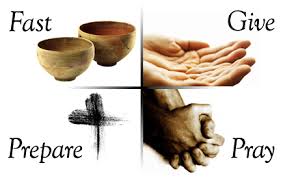
5. Lent is a time for polishing up basic Christian skills:
Prayer: on one’s own and with the group;
Fasting: practising simplicity of lifestyle with the group;
Almsgiving: making with other Christians a real contribution to making the world a better place for all God’s children.
For meditation
Jesus was led by the Spirit to the wilderness and tempted by the devil.(Mt 4:1)
*********************************************
Donal Neary SJ:
Gospel Reflections for Sundays of Year A: Matthew
www.messenger.ie/bookshop/
Co-creators
Jesus is tempted to use creation just for himself. This can happen with money, to other people, the environment and religion. We are called to look after God’s creation, not control it.
To be co-workers with God is our call – to focus on people as well as plans, to feel the needs here and abroad.
One view of God is that he looks after the world for good or bad, and we are just the receivers. The other is that we are co-workers in developing the world and God’s creation. Jesus was tempted to throw himself away from the world as he knew it, but he did not. He would live by the word of God, and God would care for him as for the parents in the first reading.
‘A Christian who doesn’t safeguard creation, or who doesn’t make it flourish, is a Christian who isn’t concerned with God’s work, that work born of God’s love for us’ (Pope Francis, 2015).
The temptation to Jesus was to take him off the path of his father. Like him, we are often tempted to use the creation of God just for our benefit. Our call is to be co-creators of the world with God.

Imagine a garden where everything is beautiful. It is the ‘creation’ of a gardener. Then imagine that someone has ruined one corner of it– notice the difference. Apply this to how we treat God’s creation.
May we care for your creation, O Lord,
with the love you have for creation and for us.
**********************************